JNVST 2027: The Last 14 Days — One Full Mock Paper a Day (and How to Analyse It)
Last verified: 14 November 2026 | Reading Time: 9 min | Author: Priya Verma
Fourteen days from today, your child will sit for the Jawahar Navodaya Vidyalaya Selection Test on Saturday, 28 November 2026, from 11:30 AM to 1:30 PM (CONFIRMED). The section-wise work is done — our guides this week covered Mental Ability, EVS, Arithmetic and the Language Test one by one. What is left is the one thing section practice cannot teach: sitting with the whole paper for two full hours. That is what this plan is for. Seven full mock papers in fourteen days, one every other day, each taken at 11:30 AM on an OMR sheet, each followed by a full analysis day. By 28 November, the real paper will feel like the eighth mock — same time, same length, same routine.
A note on the labels in this article. Where a fact is marked CONFIRMED, it comes from the official NVS prospectus for JNVST 2027, corroborated by several independent sources. The mock schedule and analysis method are coaching guidance, not official instructions.
The Paper Your Child Is Rehearsing
The JNVST Class 6 paper has 80 questions for 100 marks in 2 hours, with no negative marking (CONFIRMED). Every correct answer is worth 1.25 marks, so a child should attempt every question. The three sections come in a single booklet, and the child manages the two hours freely — a bell rings every 30 minutes (CONFIRMED). The qualifying floors matter more than the total in the final fortnight: Section 1 needs 14 marks out of 50 across Mental Ability and EVS combined, and Arithmetic and Language each need 7 marks out of 25 (CONFIRMED). A mock that clears all three floors is a pass in the only sense that counts before selection; a mock with a high total but a failed floor is a warning, not a success.
| Section | Questions | Marks | Suggested time | Floor to clear |
|---|---|---|---|---|
| Section 1 — Mental Ability + EVS | 40 (20 + 20) | 50 | 60 minutes | 14 marks |
| Section 2 — Arithmetic | 20 | 25 | 30 minutes | 7 marks |
| Section 3 — Language Test | 20 | 25 | 30 minutes | 7 marks |
| Total | 80 | 100 | 120 minutes | All three floors |
The 14-Day Schedule: Seven Mocks, Seven Analysis Days
One full paper every other day. The day between mocks is not a rest day — it is the day the mock pays off. Mocks start at 11:30 AM sharp, the exact exam time, so the child's body clock learns when to be sharp. Keep the same pen, the same desk and the same two-hour silence every time.
| Day | Date | What happens | The point of the day |
|---|---|---|---|
| Day 1 | Sat 14 Nov | Mock 1 — full paper, 11:30 AM | Baseline: where the child stands today |
| Day 2 | Sun 15 Nov | Analyse Mock 1 | Sort every wrong answer into the error log |
| Day 3 | Mon 16 Nov | Mock 2 | First re-test of the weak section |
| Day 4 | Tue 17 Nov | Analyse Mock 2 + section drill | One hour on the weakest section only |
| Day 5 | Wed 18 Nov | Mock 3 | Check whether the drill moved the score |
| Day 6 | Thu 19 Nov | Analyse Mock 3 | Rebuild the error log; drop fixed errors |
| Day 7 | Fri 20 Nov | Mock 4 | Mid-point check: halfway to the exam |
| Day 8 | Sat 21 Nov | Analyse Mock 4 + OMR practice | 20 questions on a real OMR sheet, ballpoint only |
| Day 9 | Sun 22 Nov | Mock 5 | First mock under full exam-day routine |
| Day 10 | Mon 23 Nov | Analyse Mock 5 | Time audit: which section ran over? |
| Day 11 | Tue 24 Nov | Mock 6 | Practise the new time split |
| Day 12 | Wed 25 Nov | Analyse Mock 6 | Final fixes only — no new topics |
| Day 13 | Thu 26 Nov | Mock 7 — the last full paper | Dress rehearsal; pack the exam bag after |
| Day 14 | Fri 27 Nov | Rest + error notebook | Read the notebook, sleep early, nothing new |
How to Run a Mock Like the Real Exam
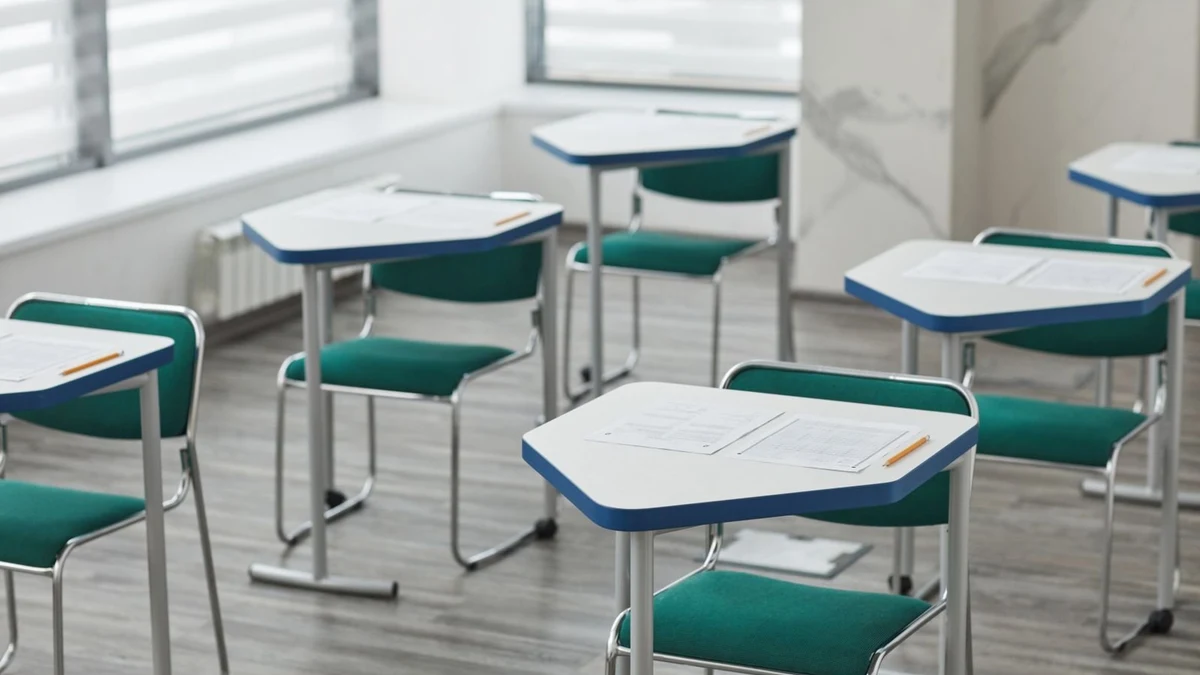
A mock taken casually teaches nothing. Run each one like 28 November: start at 11:30 AM, no phone in the room, no break for two hours, and no leaving the desk until the full time is complete — on exam day, no candidate can leave the hall until the full time is over (CONFIRMED). Answers go on an OMR sheet with a blue or black ballpoint pen only; pencils are not allowed, and a darkened circle cannot be changed — no erasing, no whitener (CONFIRMED). Mark the OMR sheet question by question as the child goes, not in a block at the end: that is the single most common source of shifted answers. Keep a clock visible and note the time when each section finishes, so the analysis day can see where the minutes went. If the child finishes early, use the remaining time to re-check marked questions, not to leave — the habit of sitting the full two hours is itself part of the training.
The Analysis Day: Where the Marks Actually Come From
A mock that is not analysed is only half a mock. The morning after each paper, sit with the child for 45 minutes and sort every wrong and guessed answer into three buckets: concept (the child did not know how to do it), silly (knew it, marked it wrong — misread the question, copied the wrong option, or slipped on the OMR sheet), and time (ran out before reaching it). In our coaches' experience, the silly bucket is the biggest in the first two mocks and the easiest to shrink — it is also the bucket parents ignore, because it looks like bad luck instead of a fixable habit. Keep one page per section in the error notebook and write the section scores of all seven mocks in a row, so the trend is visible: a section that climbs across the mocks is ready, while a section stuck in the same place needs the drill hour, not another full paper. When a section needs that hour, use the section guides: our Mental Ability figure plan, Arithmetic drill plan, Language Test reading plan and EVS guide each cover one section in detail.
The Last Two Days: Taper, Don't Cram
Mock 7 on Thursday 26 November is the last full paper. After it, the work stops growing. Friday 27 November is for the error notebook only: read it once, re-solve the five hardest questions from the week, and check the admit card details against the child's Aadhaar — admit cards were released on 28 October 2026 (CONFIRMED), and our admit card and exam-day guide has the full checklist. Pack the bag the same evening: admit card printout and two blue or black ballpoint pens. An early night matters more than one more chapter: the exam starts at 11:30 AM and the child must be seated by 11:00 AM (CONFIRMED), so a rested child who arrives at 10:30 AM beats a tired one who revised until midnight. The result is expected by the end of March 2027 (CONFIRMED, per the prospectus). Until then, the job is done — seven papers, seven analyses, and a routine the child has already lived seven times. JGPS runs Navodaya coaching batches for Class 5 students, and our free online mock test lets your child practise the same question types at home.
Want a coach to run this mock plan with your child?
JGPS runs dedicated Navodaya batches in Joya, Amroha, with weekly full mocks in the final weeks and a coach who analyses every paper with your child. Call or WhatsApp us on +91 9997161490 to check batch timings and seat availability.