RIMCEE 2026: After 6 December — Result by 20 February, Viva Voce in April and the Medical Board
Last verified: 19 November 2026 | Reading Time: 9 min | Author: Ravi Prakash
Every RIMC aspirant's calendar stops at Sunday, 6 December 2026 — the Stage-I written exam. That is only the first of three stages. The written paper decides who gets called forward, but it does not decide who joins the Rashtriya Indian Military College, Dehradun. After the written exam comes a result in February, a 50-mark viva voce in April, and a medical board — and a child must pass each stage separately. This guide maps the whole road from 6 December to the July 2027 term, using the dates and rules in the official RIMCEE-2026 Information Bulletin, so that Amroha families can plan the four waiting months instead of drifting through them.
The road after 6 December, at a glance
CONFIRMED: The bulletin sets out the sequence and the dates. The National Testing Agency (NTA) conducts Stage-I, declares its result and hands the processed merit data to RIMC. RIMC then runs everything that follows — the viva voce, the medical examination, the final merit list and admission. The schedule in the bulletin will not change even if the exam date is declared a public holiday.
| Stage | What happens | When |
|---|---|---|
| Stage-I written exam | English 125, Maths 200, GK 75 — 400 marks, 4 hours 30 minutes | 6 December 2026 (CONFIRMED) |
| Answer keys | Scanned answer sheets, question paper sets and answer keys displayed on the NTA website | Date announced later (CONFIRMED) |
| Stage-I result | NTA declares the result; score card downloadable through the candidate login; RIMC hosts results on its website | By 20 February 2027 (CONFIRMED) |
| Stage-II viva voce | 50 marks, conducted by the State Government board | Tentatively April 2027, 4–6 weeks after the result (CONFIRMED) |
| Stage-III medical | Medical examination at a selected military hospital — FIT or UNFIT | After the viva, for candidates on the medical call-up list (CONFIRMED) |
| Final merit and admission | Written + viva marks, by merit and vacancy | July 2027 term (CONFIRMED) |
One rule runs through all of it, and the bulletin states it twice: it is mandatory to pass all the stages separately. A strong written score cannot carry a failed viva, and a good viva cannot carry a medical unfit. Plan for three passes, not one big total.
Stage-I result: by 20 February 2027
CONFIRMED: The Stage-I result will be declared by 20 February 2027. NTA declares it, and RIMC hosts the results on its official website; each candidate can also download their own score card through the candidate login on the NTA RIMCEE portal. The list of candidates who qualify for the viva voce is sent by RIMC to the respective State Governments after approval — so the result is not just a score, it is the call-up list for the next stage.
Remember what qualifying means here. A candidate must score at least 50% in each paper separately — 100 out of 200 in Maths, 62.5 out of 125 in English and 37.5 out of 75 in GK — to be called for the viva. There is no negative marking, so every question should have been attempted, and the written total is out of 400. If your child clears all three floors, the written job is done; if any one paper falls short, the total does not save them. Our Maths plan, English plan and GK plan were built around exactly those floors.
Two practical points for the waiting months. First, the bulletin says scanned answer sheets, question paper sets and answer keys will be displayed on the NTA website, with the date announced later — check the portal in the weeks after the exam and keep your child's application number and password safe, because the score card download needs the same login. Second, representations about discrepancies in answer sheets are entertained only within three months of the declaration of result (CONFIRMED) — so if anything looks wrong in the key or the scanned sheet, raise it promptly, not in April.
Stage-II viva voce: 50 marks in April
CONFIRMED: The viva voce carries 50 marks and is conducted by the State Governments. Only candidates who qualify the written exam are called, and the viva is held at the place or state of domicile — for most Amroha families, that means Uttar Pradesh. The exact date and venue are announced later on the official NTA and RIMC websites, tentatively in April 2027, four to six weeks after the result.
What does the board actually test? The bulletin says the viva is designed primarily to test the intelligence, personality and communication skills of candidates. It is a conversation with a panel, not a second written paper read aloud — a child who can talk naturally about what they read, explain an opinion and answer follow-up questions will do better than a child who has memorised facts but freezes when asked why. And the viva has its own pass mark: 50% must be obtained — 25 out of 50 (CONFIRMED). A child can clear the written exam and still fall at this stage.
| Who sits on the viva board | Role |
|---|---|
| Chief Secretary to the State Government (or a Secretary nominated by them) | Chair |
| Two military officers (one not below Lt Colonel or equivalent) | Service members |
| State Director of Public Instruction / Director of Education (or a senior officer nominated by them) | Education member |
| A member of the State Public Service Commission, where practicable | Member |
One detail worth knowing now: wards of Central Government employees may take the exam and viva at the place of posting of either parent or their domicile state, but their candidature is considered from their original domicile state — and parents in that position must inform the domicile state while applying. For interview practice, the same habits that help in any selection interview apply, and our RMS CET interview guide covers the same ground for the younger age group.
Stage-III medical: FIT or UNFIT
CONFIRMED: Candidates who qualify the written exam and the viva voce, and are included in the medical call-up list, undergo a medical examination at a selected military hospital — the board sits at the Military, Air Force or Navy hospital nearest to the candidate's residence. The verdict is binary: FIT or UNFIT. Only medically fit candidates are considered for selection and admission, subject to merit and vacancy.
The standards are strict, and the bulletin says they should be at par with NDA standards. The most common surprise for parents is the eyesight rule, so check it now — not in April, when there is no time to act:
| Visual standard (CONFIRMED) | Requirement |
|---|---|
| Corrected vision | 6/6 in each eye |
| Uncorrected vision | 6/18 in each eye |
| Myopia limit | Less than −1.25D sphere, astigmatism under ±0.5D cylinder |
| Hypermetropia limit | Less than +1.25D sphere, astigmatism under ±0.5D cylinder |
| LASIK and equivalent procedures | Not permitted |
| Colour vision | CP-II standard; fundus, visual fields, binocular vision and stereopsis must be healthy |
The board also checks for weak constitution, imperfect development, serious malformation or obesity, hearing, heart and lung disease, and a history of epilepsy or mental disease, among other conditions. Height and weight have no fixed numbers at this age — the bulletin is explicit that they are largely governed by heredity — but parents of short-stature children should keep the eventual Armed Forces height standards in mind before seeking admission. A simple, useful step this month: get your child's eyes tested by an eye specialist now, while there is time to understand the numbers, and keep the report with the other documents.
Final merit, fees and the July 2027 term
CONFIRMED: The final merit combines the written exam (400 marks) and the viva voce (50 marks) — a 450-mark total — and selection is by merit and vacancy. The medical is qualifying only; it adds no marks. Admission is to Class 8 at RIMC, Dehradun, for the term beginning July 2027, and the tentative intake is 25 boy cadets and 10 girl cadets per term. That small number is the whole story of RIMCEE: across all states and union territories, roughly three dozen seats a term, so the viva's 50 marks often decide the final order between children with similar written totals.
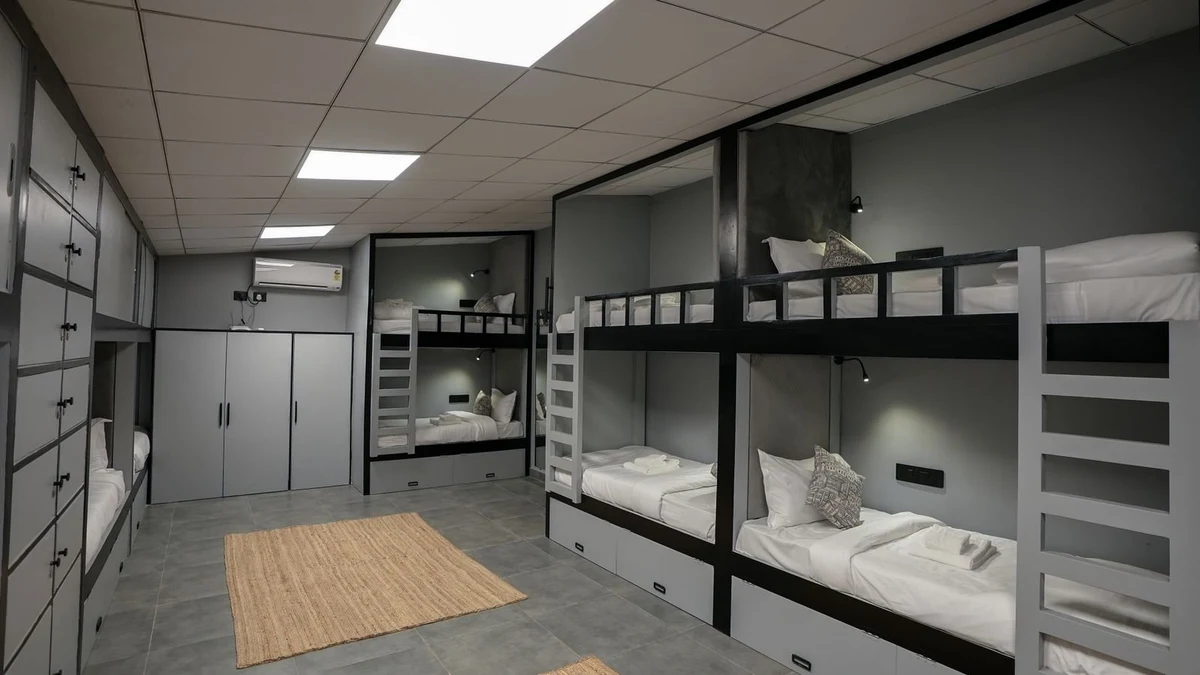
Families should also know the cost of the place they are competing for. The bulletin lists the annual fee as ₹1,48,650 for General category candidates and ₹1,31,850 for SC/ST candidates, plus a one-time security deposit of ₹50,000 in the first term, refunded when the cadet graduates. Fees are heavily subsidised by the Central Government, and several State Governments give generous scholarships to meritorious students. What the fee buys is a five-year residential education — cadets live in dormitories, dine together in the Cadet's Mess, and study with a teacher-student ratio of 1:12.5 — after which they take the UPSC examination and the Services Selection Board interview for the National Defence Academy. RIMC's stated mission is to feed the NDA and the Indian Naval Academy, and its alumni include four Chiefs of Army Staff and two Chiefs of Air Staff.
The December-to-April plan for Amroha families
The four months between the written exam and the viva are not dead time. They are the only window in which the viva and the medical can still be improved — and they overlap with two other exams many of the same children are sitting. Use them deliberately:
- December — finish the other exams first. JNVST is on 28 November and RMS CET on 13 December, and AISSEE 2027 forms close on 2 December. Do not let viva preparation steal revision time from exams that are still ahead. Our JNVST after-exam guide covers what follows 28 November.
- January — start the conversation habit. Fifteen minutes of reading aloud daily, and one opinion question at dinner — what your child thinks about something in the news, and why. The viva rewards children who can discuss, not children who can recite.
- February — watch for the result. Check the NTA RIMCEE portal and rimc.edu.in around 20 February, download the score card, and confirm the 50% floors in each paper. If anything in the answer key or scanned sheet looks wrong, remember the three-month window for representations.
- March — documents and health. Keep the original documents ready for the final verification RIMC conducts — birth certificate, domicile, caste certificate where applicable, and the Class 7 studentship certificate. Get the eye test done if you have not already, and keep up daily physical activity; the medical board notices fitness, not just paperwork.
- April — viva month. Practise short, honest answers about school, hobbies, current affairs and why your child wants to join RIMC. Keep the phone and the portal checked for the exact date and venue, which RIMC announces separately.
The written exam on 6 December is the hardest paper your child will sit this year. But selection is three stages, and the families who treat February, April and the medical board as part of the same campaign — not as surprises — are the ones whose children walk into RIMC in July 2027. Start the viva habits in January, check the eyesight now, and keep every document in one folder.
Planning RIMC, Sainik School or Navodaya admission for your child?
JGPS School Joya coaches Amroha students for RIMCEE, AISSEE, RMS CET and JNVST — from form filling to the written exam and the interview. Call +91 9997161490 for free counselling, or visit our military school coaching page.