UP Sainik School Entrance Exam 2027: 37 Days to the 20 December Exam — A Coaching Guide for Amroha Parents
Last verified: 13 November 2026 | Reading Time: 9 min | Author: Amit Kumar
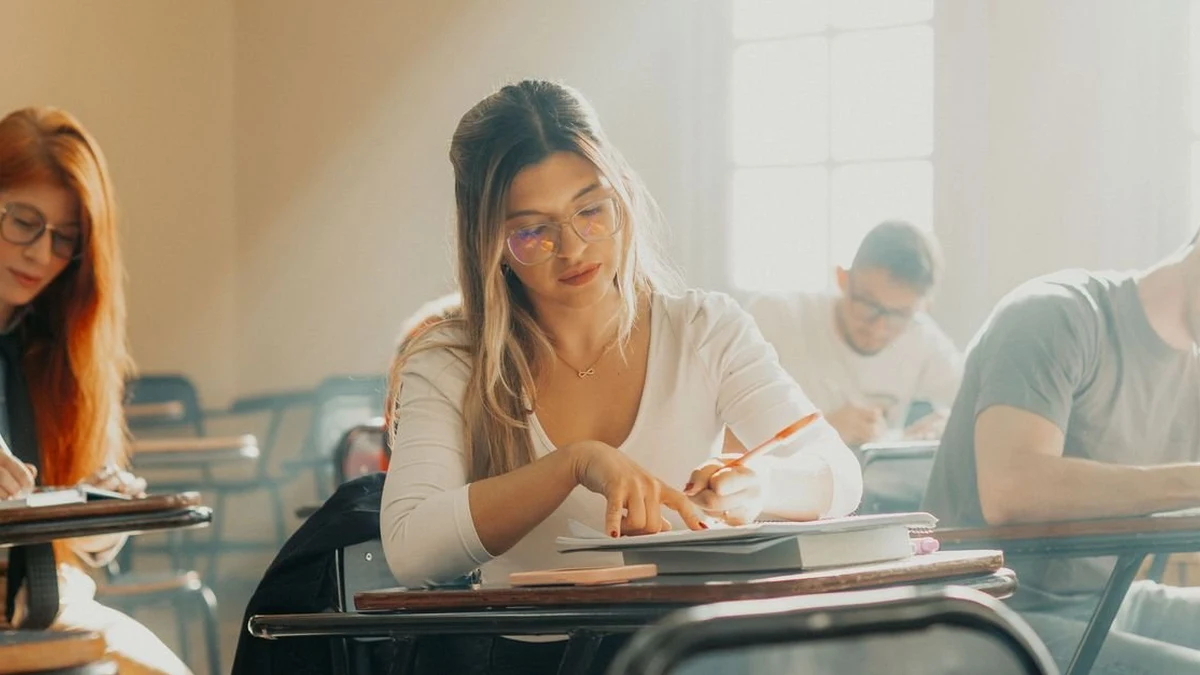
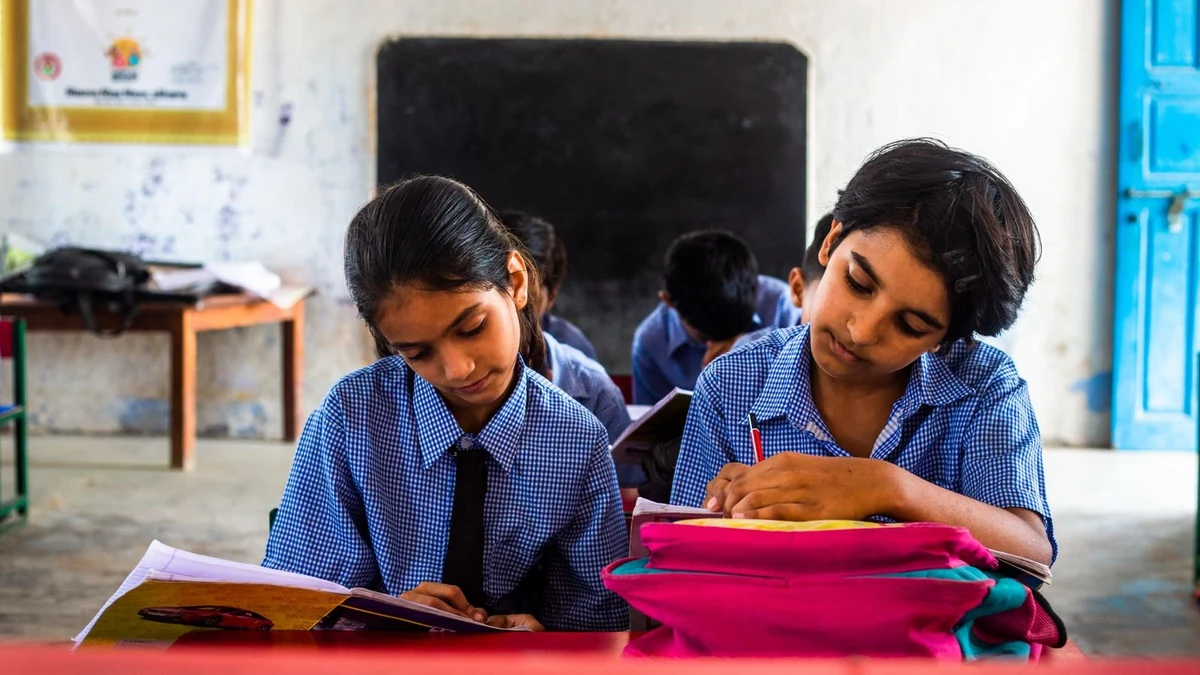
December is the busiest month in the defence-school calendar for families in Amroha: JNVST on 28 November, RIMCEE on 6 December, RMS CET on 13 December — and then, on Sunday, 20 December 2026, the UP Sainik School Entrance Examination for admission to Captain Manoj Kumar Pandey UP Sainik School, Lucknow and Sainik School, Gorakhpur. From today, 13 November, that is exactly 37 days. This exam is different from the other three in one decisive way: it is only for children of Uttar Pradesh. Both the applicant and the father must be UP domiciles, and the two schools it fills are in Lucknow and Gorakhpur — a day's journey from Joya, not a flight away. Applications closed on 31 October 2026, so this guide is for the families whose child is already registered, and for Class 5 and Class 8 parents who should be watching this cycle to plan the next one. Every date below marked CONFIRMED comes from the schools' official instructions for 2027-28, published on upsainikschool.org; the paper pattern follows the schools' published exam scheme.
The Exam at a Glance
The written test is a single OMR-based objective paper. Shortlisted candidates then face an interview and a medical examination, and the final merit list combines the written exam, the interview and medical fitness, with reservation applied. The official schedule after the exam is unusually quick — the written result is expected about ten days after the test.
| Event | Date | Status |
|---|---|---|
| Entrance exam (OMR, 200 marks, 2 hours 30 minutes) | Sunday, 20 December 2026 | CONFIRMED |
| Admit card download (dashboard login) | After 25 November 2026 | CONFIRMED |
| Answer key uploaded | 24 December 2026 (tentative) | CONFIRMED |
| Written exam result | 30 December 2026 (tentative) | CONFIRMED |
| Interview letter download | 7 January 2027 (tentative) | CONFIRMED |
| Medical examination and interview | 1 February – 28 February 2027 | CONFIRMED |
| Final result | 15 – 20 March 2027 | CONFIRMED |
One deadline has already passed and cannot be recovered: the correction window ran from 3 to 5 November 2026, and it is now closed. Families who spotted an error after that date cannot edit the form. What can still be checked today is the admit-card login — keep the username and password from registration safe, because the same login is used for the admit card, the interview letter and all future correspondence.
Who This Exam Is For
UP Sainik Schools are English-medium residential schools affiliated to CBSE, run by the UP Sainik Schools Society under the chairmanship of the Chief Minister of UP, to prepare UP students for the officers' cadre through the NDA. Admission is to Class 6 and Class 9 for the 2027-28 session. For Class 6, the child must have been born between 2 July 2015 and 1 January 2018 (both dates inclusive); for Class 9, between 2 July 2012 and 1 January 2015. The child must also have passed Class 5 (for Class 6 entry) or Class 8 (for Class 9 entry) from a recognised school by 20 May 2027. Lucknow admits boys only in Class 6 and boys and girls in Class 9; Gorakhpur admits boys and girls in both classes. Reservation in the total vacancies is 27% OBC, 21% SC, 2% ST and 10% EWS-General. The normal school fee is Rs. 50,000 per year, and a self-finance seat — available only for Class 9 boys at Lucknow — costs Rs. 1,00,000 per year, excluding other miscellaneous charges, with an enhancement expected. Parents planning the budget should treat these as the school's stated figures and confirm them in the joining instructions.
The Paper: Where the 200 Marks Sit
The written paper has 200 questions for 200 marks — one mark each — in 2 hours 30 minutes. That is 45 seconds per question on average, so speed matters as much as knowledge. The syllabus follows the Class 5 level (for Class 6 entry) and Class 8 level (for Class 9 entry) curriculum of the UP Board, CBSE or CISCE. There is no negative marking for a wrong answer in the published pattern, so every question should be attempted.
| Subject | Questions | Marks | Share of paper |
|---|---|---|---|
| Mathematics | 75 | 75 | 37.5% |
| English | 50 | 50 | 25% |
| General Knowledge | 50 | 50 | 25% |
| Intelligence Test | 25 | 25 | 12.5% |
| Total | 200 | 200 | 100% |
Mathematics is the biggest single block at 75 marks, so it decides the rank more than any other subject — but note the shape of the paper. Unlike AISSEE, where Maths is half the paper, here English and General Knowledge together are worth 100 marks, more than Maths alone. A child who is strong in Maths but weak in English and GK leaves 100 marks on the table. That is why the 37-day plan below splits time across all four subjects instead of chasing Maths alone. Families preparing for AISSEE coaching will find much of the Maths and Intelligence work transfers directly — the difference is the weightage and the OMR speed. Our Sainik School coaching batches and military school coaching cover both papers in the same weekly timetable for this reason.
The 37-Day Coaching Plan
Thirty-seven days is enough to finish, not to start. The plan below assumes the syllabus is broadly covered and uses the remaining time to convert knowledge into marks. It runs in three phases, and every phase ends with a full mock under exam conditions.
Days 1–14 (13–26 November): close the gaps. Take one diagnostic mock in the first two days and list every chapter where the child scored below half. Spend the fortnight on those chapters only — in Maths, the Class 5 topics that repeat every year (fractions, decimals, percentages, HCF-LCM, unitary method, simple geometry); in English, comprehension and basic grammar rather than new vocabulary lists; in GK, UP-specific facts and current affairs of the last six months. Do one 50-question OMR sheet every alternate day so bubbling becomes automatic. Download the admit card the moment it appears after 25 November and check the name, photograph, exam centre and reporting time against the school ID card the same evening.
Days 15–28 (27 November – 10 December): mocks and speed. Three full 200-question mocks a week, each in one 2-hour-30-minute sitting, with the answer key checked the same day. The target is not the score — it is the pattern of errors. If Maths is slow, the child is solving in the wrong order: GK and Intelligence first (fast, factual), then English, then Maths with the remaining time. Keep a one-page error diary: every repeated mistake gets a five-minute drill the next morning. This is also the fortnight to fix the centre journey — candidates could choose up to three centres from Agra, Ayodhya, Bareilly, Ghaziabad, Gorakhpur, Jhansi, Meerut, Prayagraj, Varanasi and Lucknow, and the school allots one of them. For most Amroha families, Meerut is the nearest of the ten; confirm which centre was actually allotted on the admit card and plan the travel the same week, not on 19 December.
Days 29–37 (11–20 December): taper and exam day. No new chapters. One mock on 13 and 16 December, then only revision of the error diary and the GK notes. The last two days are for the admit card, the school ID card or bonafide certificate, two pens, and sleep. Children also appearing for JNVST on 28 November or RMS CET on 13 December should treat those exams as live mocks for this one — same OMR discipline, same morning routine. Parents weighing whether to prepare locally or move the child should read our guide on coaching in Amroha vs Delhi or Aligarh before deciding anything in the final month.
Admit Card and Exam-Day Rules Parents Miss
The official instructions carry four rules that catch families every year. First, besides the admit card, the child must bring the student identity card or a bonafide certificate with photograph, attested by the head of the institution where the child is presently studying. The exam superintendent verifies the photo ID against the admit card at the centre — any mismatch means the child is not allowed to appear and the candidature is cancelled, with no refund of the fee. Second, the admit card has two sections: the applicant's copy and the school's office copy. The school's copy must be handed to the invigilator during the written exam, so do not leave it at home. Third, the same recent photograph that was uploaded in the form must be pasted on the admit card. Fourth, once the exam commences, a candidate who reports late is not allowed to appear and is marked absent. Reach the centre early; the reporting time is printed on the admit card. The school's helpline for registration and fee queries is 7052777795, between 9 AM and 2 PM on working days — keep the application ID, registered mobile number and the candidate's name ready before calling.
After the Exam: Answer Key to Final Result
The written paper is only the first gate. The tentative answer key is uploaded on 24 December 2026, and the written result follows on 30 December 2026 — both on upsainikschool.org. Shortlisted candidates download their interview letter from the dashboard on 7 January 2027; the letter is not sent separately. The medical examination and interview run between 1 and 28 February 2027 at the school campus, and the final result is expected between 15 and 20 March 2027. For the interview, the original domicile certificate, caste certificate (if applicable), birth certificate and the duly completed medical form on the school's prescribed format must be carried, with one self-attested photocopy each. Start collecting these now — the domicile and birth certificates are the two documents that take the longest to correct if they carry an error. Families already following our AISSEE 2027 81-day coaching plan will recognise the rhythm: the written exam is the middle of the journey, and the interview and medical decide the final list.
Preparing for UP Sainik School or Another Entrance Exam?
JGPS School Joya runs entrance coaching batches for UP Sainik School, Sainik School (AISSEE), Navodaya (JNVST) and RMS CET — with weekly mocks, OMR practice and interview preparation. Call +91 9997161490 for batch timings and a free counselling session.