School Library Habits: Building Readers in Classes 1-5
Last verified: 5 November 2026 | Reading Time: 8 min | Author: Priya Verma
Most parents in Joya and Amroha ask the same question around Class 3 or 4: "My child can read the textbook, but will not pick up a book on their own." That gap — between being able to read and wanting to read — is exactly what the primary years are for. Classes 1 to 5 are when reading changes from a school task into a personal habit, and the way a school and a home handle those five years decides which side of that gap a child lands on.
India's own policy framework puts the same weight on these years. Under the National Initiative for Proficiency in Reading with Understanding and Numeracy (NIPUN Bharat), launched by the Ministry of Education in July 2021, every child is expected to attain foundational literacy and numeracy by the end of Grade 3, by 2026-27. [CONFIRMED] The National Curriculum Framework for the Foundational Stage (NCERT, 2022) sets the same destination in plainer words: a child should become an independent reader and writer by age 8, in Grade 3. [CONFIRMED] These are not entrance-exam targets. They are the floor every primary classroom is supposed to build on.
Why Classes 1-5 Decide Whether a Child Becomes a Reader
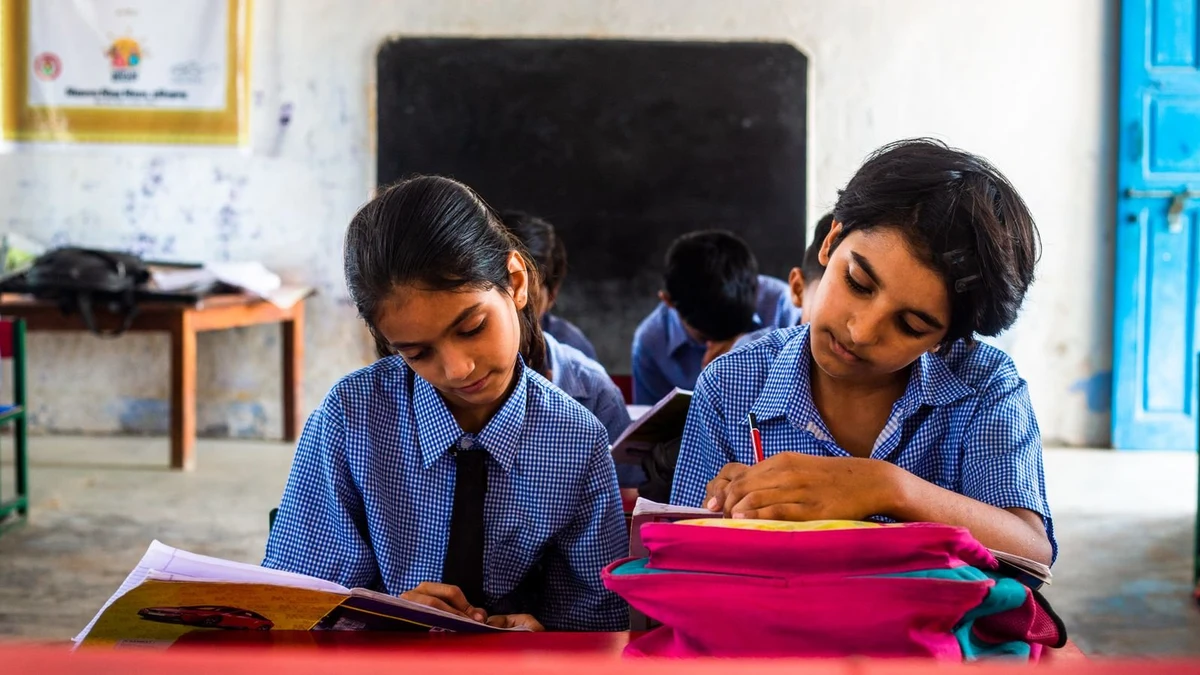
Between Class 1 and Class 5, a child passes through three stages, and each one needs a different kind of support. In Classes 1 and 2, the work is decoding: turning letters into words, words into sentences. This is slow, effortful work, and the child needs short, picture-rich books and an adult reading alongside them. In Class 3, the shift is to fluency with understanding — reading smoothly and actually following what the text says. NIPUN Bharat's own learning targets (the "Lakshya Soochi") describe this stage precisely: a Grade 2 child should read 45 to 60 words per minute, and a Grade 3 child at least 60 words per minute correctly, from an age-appropriate unknown text, with comprehension. [CONFIRMED] These are reference points for teachers, not a test parents should run at home — but they show what "reading well" concretely means by Class 3.
Classes 4 and 5 are where the habit itself forms. The child can now read on their own, so the question stops being "can they read?" and becomes "will they choose to?" That is where choice and a library culture matter more than any worksheet. A child who spends these two years reading only what is assigned will usually stop reading the day the assignment stops. A child who spends them choosing books, finishing some, abandoning others, and talking about what they liked has learned something no exam can measure directly — that reading is theirs.
A Class-Wise Reading Ladder Parents Can Follow
There is no single right number of minutes or books. But a steady, predictable routine beats occasional bursts every time. The ladder below is a suggested routine a family can adapt — not a rule, and not a target to worry over if a child is a little ahead or behind it.
| Class | Daily reading time (suggested) | What the child reads | What the adult does |
|---|---|---|---|
| Class 1 | 10-15 minutes | Picture books, rhymes, big-print stories | Reads aloud together, points at words |
| Class 2 | 15-20 minutes | Short stories with pictures, simple poems | Shared reading — child reads, adult helps |
| Class 3 | 20 minutes | Short chapter books, story collections | Guided reading, then independent reading |
| Class 4 | 20-30 minutes | Chapter books, children's magazines | Talks about the story, asks what happens next |
| Class 5 | 30 minutes | Varied books — adventure, humour, knowledge | Book talk: short reviews, recommendations |
Note: the minutes are a suggested family routine, not a government norm. The only official benchmarks in this article are the NIPUN Bharat reading targets quoted above.
How a School Library Builds the Habit
A library period that actually works has four ingredients, and parents can check for each of them. First, a fixed weekly library period on the timetable — not a period that gets borrowed for other subjects whenever there is pressure. Second, free choice: the child picks the book, even if the teacher would have picked a different one. Third, a real borrowing system, so books travel home and come back, and the child learns to finish and return. Fourth, read-aloud time, where the teacher reads to the class. The National Curriculum Framework for the Foundational Stage recommends exactly this progression — read-aloud, shared reading, guided reading and independent reading — as the way reading is built in the early years. [CONFIRMED]
There is one more ingredient that costs nothing: teachers who visibly read. A child who sees a teacher with a book in hand during a free period learns more about reading than from any poster on the library wall. When you visit a school, notice whether the library is open, used and talked about — or locked and decorative. That tells you more about its reading culture than its book count. Our guide on what a good primary classroom looks like lists other things worth noticing on a school visit.
What Parents Can Do at Home
The home is where the habit either takes root or withers, and the good news is that none of it needs money or special training. Start with fifteen minutes of read-aloud a day — the same time every day, so it becomes part of the routine rather than a negotiation. Read in the child's home language first: the National Curriculum Framework is clear that the concept of reading and writing is best developed first in the child's home language, with other languages added gradually. [CONFIRMED] A child who loves stories in Hindi will transfer that love to English far more easily than a child who was pushed into English books they did not enjoy.
Let the child choose, even if the choice looks too easy or too silly to you. A Class 4 child re-reading a favourite comic is still reading — and still building stamina. Talk about the story instead of testing it: "What do you think will happen next?" works far better than "Now tell me what you just read." Keep a small visible book corner at home, even if it is just one shelf, and put the phone away during reading time. And on parent-teacher meeting days, walk through the school library with your child and let them show you what they have been borrowing. If you are weighing admissions for the next session, our Joya admission timeline and documents guide for 2027-28 and our notes on the right age and readiness signs for nursery admission may help you plan the visit.
Four Mistakes That Quietly Kill Reading
1. Books that are too hard. A book two levels above the child teaches frustration, not vocabulary. The right book is one the child can read mostly on their own, with a few new words to stretch them.
2. A quiz after every story. When every book ends in questions, reading starts to feel like an exam. Sometimes the only follow-up should be "Did you enjoy it?"
3. Reading only for exams. If the only reading a child ever does is textbook chapters and guides, they will reasonably conclude that reading is a chore. Storybooks, comics and magazines are not a distraction from study — they are what make study readable.
4. Comparing children. "Your cousin finished five books this month" has never made a child read a sixth. Reading speed and taste vary widely in primary school, and comparison usually produces hiding, not reading.
How Primary Reading Connects to Entrance Exams Later
Parents sometimes treat reading and entrance preparation as two separate projects. They are the same project, at different ages. Every major school entrance a Joya child may attempt — AMU, JMI, Navodaya (JNVST) or Sainik School (AISSEE) — tests comprehension: reading a passage, understanding it, and answering from it. A child who has read stories for pleasure since Class 3 walks into those papers with years of practice no short course can manufacture. The reading habit built in Classes 1 to 5 is, quite literally, the cheapest entrance preparation there is.
So the question is simple: does your child have a book they are looking forward to tonight? If yes, protect that. If not, the library is the place to start.
Visit the JGPS Library With Your Child
Come and see how our primary classes use the library — weekly library periods, a borrowing system, and read-aloud sessions from Class 1. Talk to our counsellors about building a reading plan for your child, from nursery to entrance preparation.
Call or WhatsApp +91 9997161490 to fix a school visit, or explore admissions at JGPS.