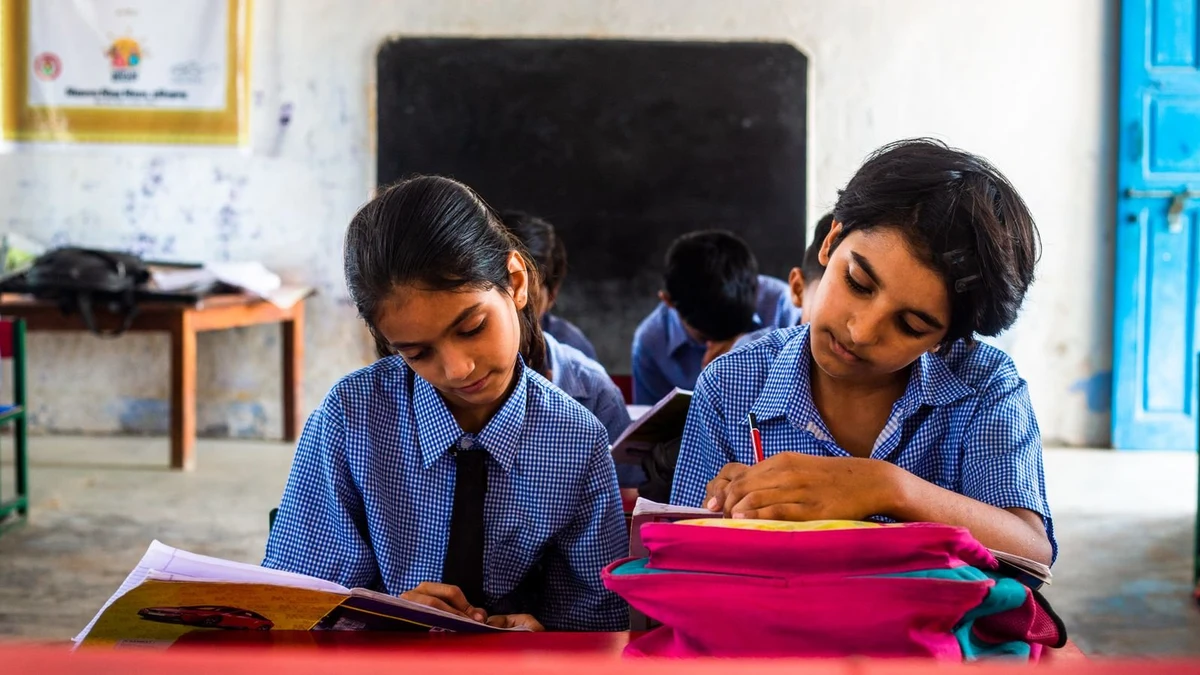
A school brochure will show you the smartest corridor, the newest computer lab and the shiniest trophy cabinet. None of that tells you what your child's actual day will feel like. That answer lives in one room: the classroom where your child will sit for five or six hours a day. Before you finalise any admission, ask to see a real primary classroom during a real lesson — and spend twenty minutes watching, not listening to a sales pitch. This guide tells you exactly what to look for.
Last verified: 5 November 2026 | Reading Time: 7 min | Author: Priya Verma
Why twenty minutes in a classroom beats a brochure
Children spend most of their school day in one room, with one teacher, among the same thirty-odd classmates. The quality of that room — and of the teaching inside it — shapes more of your child's learning than the building, the bus or the brand name. A short observation visit shows you things no prospectus can: whether children look relaxed or tense, whether the teacher notices the quiet child in the corner, and whether learning looks like something children do or something done to them. If a school will not let you observe a live class, even briefly, treat that as information in itself.
Start with the room: light, air and space
Begin with the basics, because children cannot learn well in a room that fights them. Is there enough daylight, or does the room depend entirely on tube lights at midday? Is the air moving — windows that open, a working fan — or is it stuffy by 11 am? Can children move between desks without squeezing past each other, and is there floor space for group work, or are rows packed wall to wall? Look at the furniture too: desks and chairs sized for six- to ten-year-olds, not adult furniture children dangle from, and bags stored where they do not block walkways. None of this needs money — it needs attention. A school that gets the basics right usually gets the rest right too.
Read the walls: children's work or shop-bought charts?
The walls of a good primary classroom are a diary of what children have actually done. Look for children's own drawings, writing and projects — uneven, misspelt, proudly displayed — rather than only glossy printed charts bought from a shop. A wall full of identical, perfect-looking work usually means the teacher made it, not the children. Also notice whether displays change: the same faded chart from last year suggests the room is a museum, while fresh work suggests children are producing something every week. A reading corner with books children can actually reach, a few objects to touch and count, and a blackboard used for children's answers rather than only the teacher's notes are all good signs.
Listen to how the teacher talks
This is the single most revealing thing you can observe. In a good primary classroom, the teacher asks more questions than she answers, and waits — a few real seconds — for a child to think before moving on. Listen for children's names being used, for praise that names what was good ("You explained that step clearly") rather than empty praise ("Good, good"), and for how mistakes are handled: a child who gives a wrong answer should be guided, not scolded or ignored. Watch the children who are not speaking. Does the teacher draw out the quiet ones, or do the same three confident children answer everything? If a child looks lost, does anyone notice? You are watching for warmth with structure — a teacher who is kind and in charge at the same time.
Count the children — and watch who gets noticed
Count the children in the room and ask how many are on the roll. CONFIRMED: the Right to Education Act, 2009 lays down a pupil-teacher ratio of 30:1 at the primary level — one teacher for every 30 children. That is the legal norm, not an ideal; a class of 40 or 45 with a single teacher means each child gets a fraction of the attention the law envisages. But numbers alone do not tell the whole story. In a class of 30, does the teacher move around the room, or stay behind the desk? Do children raise hands and get called on, or do only the front rows get attention? The best single test: pick the quietest child you can see and watch whether the teacher interacts with that child at all during your visit.
Look for play and hands-on learning, not just copying
Young children do not learn by sitting still and copying from a board for hours. CONFIRMED: the National Curriculum Framework for the Foundational Stage (NCERT, 2022) states that children in the Foundational Stage — ages 3 to 8 — learn best through play, activity, observation, imitation and concrete experiences, with continuous chances to explore and experiment. For Classes 3 to 5, the same principle holds in gentler form: activity-based tasks, simple group work and real objects before abstract rules. During your visit, look for evidence of this — children handling objects, working in pairs, drawing, sorting, building or talking through a problem — not just notebooks open to copied text. A classroom where every child is silently copying for the whole period is teaching handwriting, not understanding.
The language question
If your child speaks Hindi or another home language, ask in which language the teacher actually explains things — not what the prospectus says, but what you hear in the room. CONFIRMED: the National Curriculum Framework for the Foundational Stage notes that children learn concepts most rapidly and deeply in their home language, and that the medium of instruction in the Foundational Stage should optimally be the child's home language or mother tongue. That does not mean English should be absent; it means a good primary teacher bridges from the language the child thinks in to the language the child is learning, rather than leaving a six-year-old to guess what the lesson is about. If your child is joining from a Hindi-medium background, our guide on how school admission interviews work also helps you prepare them for the first conversations with a new school.
Your ten-minute observation checklist
Use this table during your visit. You do not need a perfect score on every row — you need a pattern. Several warning signs together matter more than any single one.
| What to watch | Good sign | Warning sign |
|---|---|---|
| Light and air | Daylight, open windows, working fans | Dark, stuffy, overcrowded room |
| Seating | Child-sized furniture, space to move | Crammed rows, adult-sized desks |
| Walls | Fresh children's work on display | Only shop-bought charts, faded displays |
| Teacher's questions | Open questions, wait time, all children asked | Only the same few children answer |
| Mistakes | Guided gently, child encouraged to retry | Scolding, mocking or ignoring |
| Class size | Near the 30:1 RTE norm, teacher circulates | 40+ children, teacher fixed at the desk |
| Activity | Hands-on tasks, pair work, discussion | Silent copying for the whole period |
| Children's mood | Relaxed, curious, raising hands | Fearful, bored or switched off |
Five questions to ask before you leave
1. How many children are in this class, and is there a second teacher or helper? The answer tells you the real ratio, not the advertised one. 2. How do you handle a child who falls behind? Look for a concrete answer — extra practice, parent meetings, small-group work — not a vague assurance. 3. How often do parents get to see actual classwork, not just report cards? Regular work sent home is a sign of a transparent classroom. 4. What does a typical day look like — how much time is play, activity and outdoor time? For primary children, a day without movement and play is a red flag. 5. Can my child spend a trial half-day here before we decide? Schools confident about their classrooms usually say yes. If you are still weighing the wider admission decision, our nursery admission readiness guide and our master documents checklist for 2027-28 cover the age and paperwork side of the same decision.
A good primary classroom is not the fanciest one. It is the one where children are seen, spoken to by name, allowed to make mistakes, and given things to do with their hands as well as their notebooks. Visit with this checklist, trust what you see more than what you are told, and choose the room your child would be happy to walk into every morning. And if the admission itself involves a move between schools, our guide to changing schools mid-session and the transfer certificate process explains the paperwork so the move does not disturb your child's learning.
Want to see a JGPS primary classroom for yourself?
Visit us in Joya, Amroha — sit in on a live class, meet the teacher and check the room against this very checklist. JGPS states a 25:1 student-teacher ratio for its primary classes. Call or WhatsApp us on +91 9997161490 to book a visit, or ask about admissions for 2027-28.