Morning Assembly to Last Bell: A Day at JGPS
Last verified: 6 November 2026 | Reading Time: 8 min | Author: Rifaul Hasan
Parents choosing a school usually judge it by results, fees and the building they see on a visit. But what your child actually lives is a day: six hours, repeated Monday to Saturday. The quality of that day is the quality of the school. Here is a walk through a school day at Jai Govind Public School, Joya — from the first bell to the last — using only the timings and arrangements the school itself states.
The Day in One Line: 8:00 AM to 2:00 PM
JGPS school hours are 8:00 AM to 2:00 PM, Monday to Saturday. [CONFIRMED — jgps.in, About page FAQ] Two seasonal adjustments apply: in summer the day runs 7:30 AM to 1:30 PM, and in winter 8:30 AM to 2:30 PM, with the exact change dates communicated to parents by notice and SMS. [CONFIRMED — jgps.in, FAQ page] The school office works a longer day, 8:00 AM to 3:00 PM, Monday to Saturday, for admissions, fee and other queries. [CONFIRMED — jgps.in, Contact page]
Arrival and Morning Assembly: The Day Starts Together
The school day begins with morning assembly — the one moment when the whole school, from the youngest nursery child to the oldest Class 8 student, is in one place doing one thing. Prayer, the national anthem, a thought for the day, and the notices that matter. It is also, quietly, where a school teaches its youngest children to stand still, listen and belong to something bigger than their classroom.
For parents, assembly is worth watching on a visit. Is it organised or chaotic? Do teachers stand with their classes? Do the children know the words they are singing? A school that runs a disciplined assembly usually runs disciplined classrooms. Assembly opens the 8:00 AM school day, so arriving on time matters — a child who misses it starts the day already behind its rhythm.
The Teaching Blocks: Where the Real Work Happens
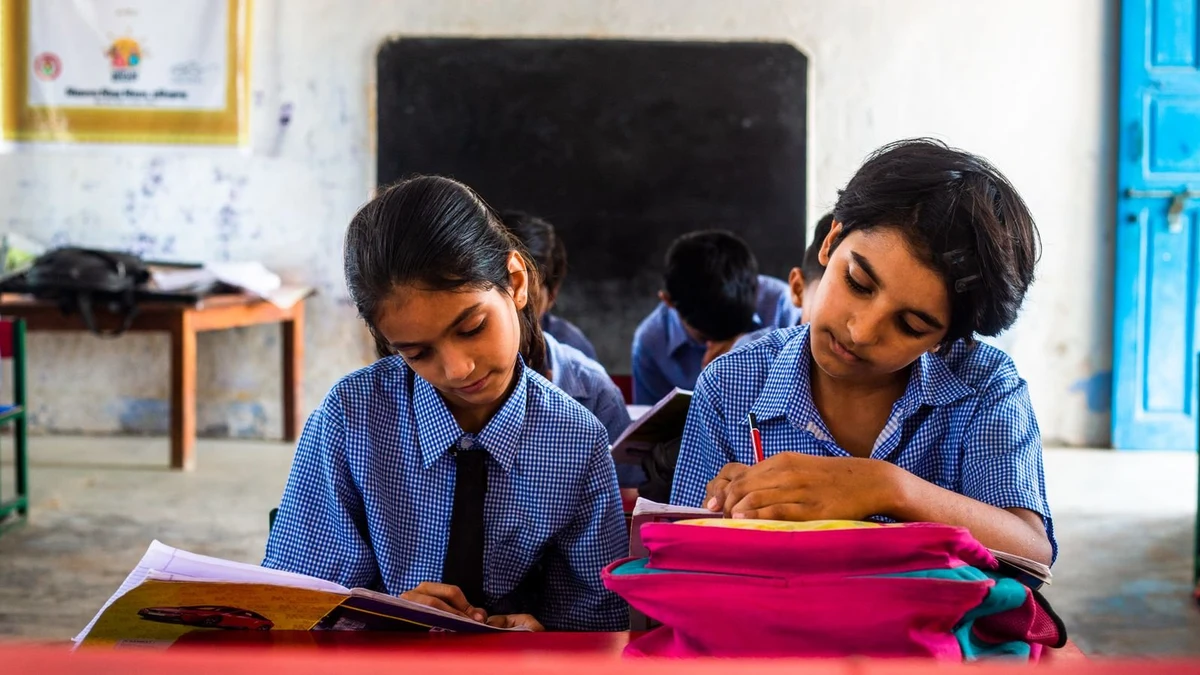
After assembly, the day settles into teaching periods. JGPS teaches Nursery to Class 8, and the shape of the day changes with age: younger children get shorter periods and more movement; older children get longer, subject-focused blocks. What stays constant is the school's stated approach to entrance preparation — foundation topics for AMU, JMI, Navodaya and Sainik School exams are covered during regular school hours as part of an integrated option, not bolted on as a separate burden. [CONFIRMED — jgps.in, FAQ page]
That integration matters. In many schools, entrance coaching is an afterthought: a separate batch, a separate fee, a child shuttling between two systems. When foundation work sits inside the school day, the child gets one coherent timetable and evenings free for homework and rest. Parents of Class 5 and 6 children should ask how this works in practice — which subjects carry foundation topics, and how the school tracks a child aiming at an entrance exam. A good answer names subjects and checkpoints; a vague answer is a warning sign. Before a visit, read the parent's guide to observing a primary classroom.
Midday: Recess, Lunch and the Library
Halfway through the day comes the break — and how a school handles its break says a lot about how it handles children. A good break is supervised, unhurried and genuinely restful: children eat, play, talk and return to class settled rather than wired. The library is open to young readers during the day, and the habits built in these short, regular slots matter more than any single library period. The guide to building readers in Classes 1–5 explains what to look for: whether children choose their own books and whether teachers read aloud.
This is the part of the day parents can most easily verify. On a visit, ask to see the lunch and play arrangements, not just the classrooms: who supervises the ground during recess, and are drinking water and toilets accessible without a teacher's permission? Those answers tell you more about daily care than any brochure.
The Afternoon: Activities, Sport and Computers
The last part of the school day is deliberately different from the first. Afternoon periods at JGPS carry the co-curricular load: sport on the ground, computer classes, and activities such as debates and quizzes. The order is intentional — physical and creative work after the academic core, when younger children in particular need to move. Sport here is meant to be a regular part of the week, not a once-a-year ceremony; the guide to school sport beyond annual day explains the difference and the questions parents should ask. Computer classes in primary school follow the same principle: what children actually learn matters more than how many computers the lab holds.
For entrance aspirants, these activities are not a distraction from preparation — they are part of it. Debates and quizzes build the general knowledge and confidence interviews reward, and sport builds the stamina a long exam season demands.
The Last Bell — and What Happens After It
The last bell rings at 2:00 PM (1:30 PM in summer, 2:30 PM in winter). [CONFIRMED — jgps.in, FAQ page] But the school day does not end for every child at the bell. JGPS also runs special extension batches after regular school timings for thorough mock testing and paper solving, for children in the entrance-coaching stream. [CONFIRMED — jgps.in, FAQ page] These after-hours batches are where timed practice happens — full-length papers under exam conditions, followed by the error analysis that turns a mock test into learning rather than just a score.
Parents should understand the trade-off. Extension batches are valuable in the final months before an exam, but they extend a child's day well beyond six hours, and a tired child learns less, not more. The right question is not whether the school offers after-hours batches — it does — but how it decides which children need them, and when. A Class 5 child with a year to go does not need the same load as a Class 6 aspirant two months from the AMU or JNVST exam.
The Day at a Glance
| Part of the day | What happens | What parents should check |
|---|---|---|
| Arrival & assembly | Whole-school assembly opens the day at 8:00 AM (7:30 AM summer / 8:30 AM winter) | Is assembly orderly? Do teachers stand with classes? |
| Morning teaching blocks | Core subjects; entrance foundation topics integrated into school hours | Which subjects carry foundation work? How is progress tracked? |
| Midday break | Lunch, supervised play, library access for young readers | Who supervises the ground? Are water and toilets freely accessible? |
| Afternoon periods | Sport, computer classes, debates and quizzes | Is sport weekly or once a year? Do children choose library books? |
| Last bell — 2:00 PM | School day ends (1:30 PM summer / 2:30 PM winter); office open till 3:00 PM | How does dispersal work? Is there a supervised wait for late pickups? |
| After hours (coaching stream) | Extension batches: mock tests and paper solving after regular timings | Who is placed in these batches, and on what basis? |
One note on this table: the clock times are the school's own published timings, and the only clock times this article states. If you visit and find different hours, ask about it the same day.
How to Use This on Your School Visit
Here is the short version for your next visit: arrive before 8:00 AM and watch assembly from the edge of the ground; ask a teacher, not the receptionist, how foundation coaching fits into the school day; look at where children eat and who watches them; ask for the library and the computer lab by name and check whether children actually use them; and ask who decides which children attend the after-hours batches. Five observations, one morning — worth more than a year of brochures.
And if the day you see matches the day described here — assembly on time, teaching blocks that include real foundation work, a supervised break, an active afternoon and a last bell that means what it says — then the school is doing the thing that matters most: running the same good day, every day. That is what 15-plus years of teaching and 500-plus entrance selections are built from — not a single result, but a repeatable day. [School's stated figures — jgps.in]
See a school day at JGPS for yourself
The best way to judge a school is to watch one full morning — assembly, classes and the midday break. Visit the campus in Joya, Amroha, or call +91 9997161490 to fix a visit slot and ask about admissions for Nursery to Class 8 and the AMU, JMI, Navodaya and Sainik School coaching batches. You can also read the admission guidelines before you come.
For parents weighing entrance coaching alongside regular schooling, the JGPS coaching overview and the parent's walkthrough of the AMU/JMI coaching batches explain how the two fit together — and the admissions interview guide will help if your child is called for an interaction after applying.